AI and Health Seed Funding Advance Health Care Technology Research Across UC Davis
By Neelanjana Gautam
In his monthly column published earlier this year, Chancellor Gary S. May highlighted how UC Davis leverages artificial intelligence to transform health care — from analyzing millions of medical records to identify patients at risk for life‑threatening conditions to improving stroke response times and cancer detection. Many AI applications are already in use across UC Davis Health clinical settings, demonstrating how responsible innovation is enhancing care, expanding access and improving lives across California and around the world. The Center for Information Technology Research in the Interest of Society and the Banatao Institute (CITRIS) is uniquely positioned to help advance this progress and is investing in innovative ideas to accelerate the impact of artificial intelligence in health care. Several new AI-based projects are emerging to address challenges across the care continuum, supported in part by funding announced in January 2026 through CITRIS’ new AI and Health Seed Funding Program.
Focused on strengthening interdisciplinary connections between schools and colleges on the Davis campus and schools of health on the Sacramento campus, the AI and Health Seed Funding Program aims to position UC Davis as a leader in interdisciplinary AI-enabled health care technology research.
The program awarded $50,000 each to six interdisciplinary research teams for projects spanning a 12-month period. The awards serve as a launchpad for early pilot and proof-of-concept studies that have strong potential for future scaling and external funding. On the Davis campus, awards are supported by the UC Davis Office of Research, UC Davis College of Engineering and the UC Davis AI Center in Engineering. Health campus supporters include the UC Davis School of Medicine Office of Research, the Betty Irene Moore School of Nursing, the Healthy Aging in a Digital world initiative and CITRIS Health.
“We’re excited to see this level of interdisciplinary collaboration taking shape across UC Davis. By bringing together researchers from the Davis campus and the health professional schools in Sacramento, the AI and Health Seed Funding Program creates new opportunities to translate innovative ideas into real-world solutions that improve patient care,” said Sam King, professor of computer science and director of CITRIS at UC Davis. “AI in health care only matters if it solves a clinical problem, and that takes real collaboration between the people building the models and the people treating patients. This program is designed to kick off new research directions between Davis and Sacramento faculty — six teams, $50k each, and the runway to generate the preliminary results PIs need to go after larger grants down the road.”
The seed program is part of CITRIS Health’s broader mission to use technology to improve health outcomes and access. The center’s mission is further driven by co-directors Nick Anderson, professor in Biomedical Informatics and chief of the Division of Health Informatics in the Department of Public health Sciences, and James P. Marcin, professor and vice chair for research in the Department of Pediatrics and director of the Center for Health and Technology at UC Davis Health.
CITRIS plans to share early findings and next steps from the inaugural cohort in 2027. At that time, the team plans to launch a broader call for proposals, potentially including other CITRIS campuses (e.g., Santa Cruz, Merced, and Berkeley) Here’s a first look at how these interdisciplinary efforts could shape the future of patient care.
Role of AI in identifying genetic risk factors of autism
The Autism Phenome Project (APP), led by Gerald Quon, associate professor in the College of Biological Sciences, is taking a new approach to understanding autism. With genetics estimated to account for 50-80% of autism risk, identifying the specific genetic variants involved could be the key to significantly improving early detection, prognosis, and personalized intervention strategies. Most large-scale autism spectrum disorder (ASD) genetic studies rely on shallow clinical labels, thus failing to capture the phenotypic heterogeneity of autism.
The APP team includes co-primary investigator Suma Shankar, professor in the Departments of Pediatrics and Ophthalmology; Christine Nordahl, professor in the department of Psychiatry and Behavioral Sciences, and John McPherson, professor in the Department of Biochemistry and Molecular Medicine. The team has collected structural and functional neuroimaging data, along with cognitive and behavioral assessments for each patient, defining thousands of ASD–related phenotypes. The project aims to generate actionable insights into ASD subtypes for future precision-medicine funding.
AI tools to help patients with mobility disorders
A research team led by Erik Henricson, associate professor in the Department of Physical Medicine & Rehabilitation and Kuan-Hua Chen, assistant professor in the Department of Ecology, is developing new artificial intelligence tools that could change how clinicians monitor and support people living with mobility‑limiting neuromuscular diseases. Current clinical tests only capture brief, in-clinic tests that do not account for how patients move in their home and community environments. Also, modern wearable sensors can capture thousands of hours of movement data, but interpreting those raw signals requires advanced computational methods. The project aims to fill that gap by training AI models directly on real‑world data collected from individuals living with these conditions. The goal is to identify digital markers that reflect disease severity, gait quality, fatigue, and changes over time.
The resulting algorithms will enable the development of STRIDE‑AI, a mobile‑phone–based system designed for continuous, remote mobility assessment using everyday devices.
AI-assisted system to evaluate donors’ cornea
Corneal transplantation remains one of the most successful surgical interventions for restoring sight, but its outcomes depend heavily on the careful selection of high‑quality donor tissue. Currently, this evaluation is performed manually by eye bank technicians who inspect microscope images to assess endothelial cell density, detect scarring, and judge overall tissue viability. While effective, this process is time‑consuming, subjective, and vulnerable to inconsistencies between evaluators. Subtle indicators of compromised tissue may be missed, and variability in assessments can affect graft success rates.
To address these challenges, a project led by Mark Mannis, distinguished professor in the Department of Ophthalmology and Vision Science and Hamed Pirsiavash, associate professor in the Department of Computer Science, have developed an AI‑assisted evaluation to improve the speed, accuracy and consistency of donor-based cornea assessments. By leveraging computer vision and machine learning, the system aims to automatically analyze key corneal features, highlight potential abnormalities, and provide standardized quality metrics. Rather than replacing human expertise, the goal is to augment it — reducing workload, minimizing variability, and ultimately improving patient outcomes.
Restoring speech through AI-powered technology
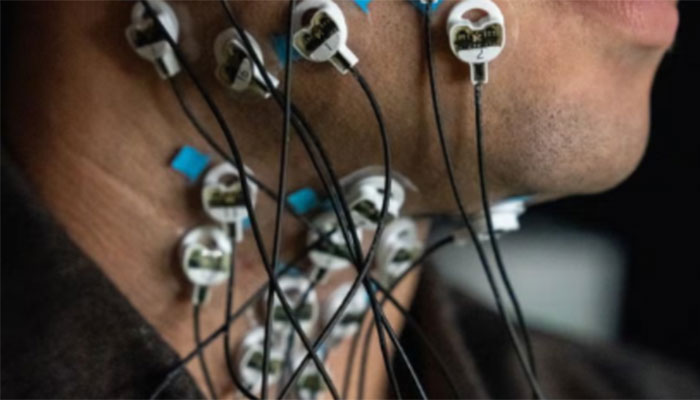
Millions of people worldwide lose the ability to speak naturally, especially those with progressive neuromotor diseases. Early in the disease, noninvasive surface electromyography can help decode speech from muscle activity, while in later stages, implanted brain‑computer interfaces (BCI) can restore communication. However, no existing system unifies these approaches to support seamless communication across the full trajectory of motor decline. By combining expertise in EMG‑based speech decoding and world‑leading neural , a project led by Sergey Stavisky, assistant professor in the Department of Neurological Surgery, and Lee Miller, professor in the Department of Neurobiology, Physiology and Behavior, Otolaryngology, aims to create an adaptive, AI‑driven communication system that evolves with each individual’s changing abilities. The team will develop multimodal AI models that learn how the brain and muscles jointly produce speech, build a shared articulatory representation aligning neural and EMG activity while capturing patterns of muscle degeneration, and synthesize speech directly from these signals. This work will ultimately enable continuous communication and improve quality of life for millions of people.
Chatbot support for sexual assault survivors
Sexual assault affects hundreds of thousands of people each year in the United States, yet most survivors never receive needed medical or mental health follow‑up. Trauma symptoms, stigma, transportation barriers, and fragmented referral systems make it difficult to stay invested in care, especially given national shortages of forensic nurses and the reliance on in‑person visits.
Many survivors—particularly adolescents and young adults—already use mobile tools for health information. Technology‑based approaches offer a promising way to expand access, improve follow‑up, and better support recovery. Led by Jessica Draughon Moret, associate professor of clinical nursing at the Betty Irene Moore School of Nursing, and Joshua McCoy, assistant professor in the Department of Computer Science, the researchers are developing a trauma-informed, AI-enabled “CARE-COMPASS: Community Assistance and Resource Engagement”, a secure chatbot designed to connect survivors to existing mental, physical and social support services. They are using human-centered design to build and refine prototypes informed by expert consultation and cognitive interviews. The goal is to generate preliminary data and a validated prototype to support subsequent National Institutes of Health (NIH) external funding and broader dissemination.
Predictive AI models to detect Alzheimer’s Disease
Alzheimer’s disease affects an estimated 6.7 million Americans currently, yet early and accurate diagnosis remains a challenge. Speech‑based biomarkers offer a promising, noninvasive tool, but current research shows key limitations such as most studies rely on a single speech task, classify participants only by broad cognitive categories rather than specific etiologies, and use features that lack clinical transparency. These gaps restrict generalizability and reduce the usefulness of speech‑based models for real‑world diagnostic support.
A new project led by Michelle Cohn, post-doctoral scholar in the Department of Linguistics and Chen-Nee Chuah, professor in the Department of Electrical and Computer Engineering, addresses these limitations by examining the UC Davis Alzheimer’s Disease Research Center Corpus, which includes conversational interviews with older adults discussing autobiographical memories. The corpus is richly annotated with cognitive status and subtype, neuropsychological assessments, and mood measures. The team is developing predictive models using a hand-crafted set of linguistically interpretable acoustic, lexical, syntactic, and pragmatic features, and evaluating feature interpretability in a user study with clinicians. This work advances early Alzheimer’s disease detection across naturalistic speech contexts and is well-positioned for follow-on funding and commercialization.
About CITRIS
The Center for Information Technology Research in the Interest of Society and the Banatao Institute (CITRIS) leverage the research strengths of the University of California campuses at Berkeley, Davis, Merced and Santa Cruz, and operate within the greater ecosystem of the University and the innovative and entrepreneurial spirit of Silicon Valley. CITRIS at UC Davis brings expertise in engineering, nanoscience, law, and medicine to bear on complex challenges related to food, health, the environment, and society.