New UC Davis Funding Bolsters Critical Research Capabilities at 20 Core Facilities
The UC Davis Office of Research is pleased to announce the initial round of recipients of the Research Cores Central Investment (RCCI) Program awards, committing $1.25 million in fiscal year 2025-26 and an additional $1 million in fiscal year 2026-27. This first round provides one-time funding aimed at retaining and enhancing critical capabilities at 20 campus research cores.
The program emerged from a recommendation developed through the Sustaining Teaching and Research Task Force (START), an initiative launched by UC Davis Provost and Executive Vice Chancellor Mary Croughan in 2023. START’s focus is to strengthen the university’s education, research and service mission through strategic, actionable initiatives. Research related recommendations that emerged from START included boosting administrative support for faculty, improving grant reporting tools, stabilizing funding for research cores and shared resource facilities, modernizing network infrastructure and management, addressing staffing priorities, and supporting high performance computing needs.
“The goal of the RCCI Program is to ensure continuity, optimize productivity and widen access to state-of-the-art shared instrumentation and expertise through a coordinated approach,” said Simon Atkinson, vice chancellor for research at UC Davis. “This strategic investment, supported by Provost Croughan, underscores the university’s commitment to advancing a world-class infrastructure in support of our research and teaching missions.”
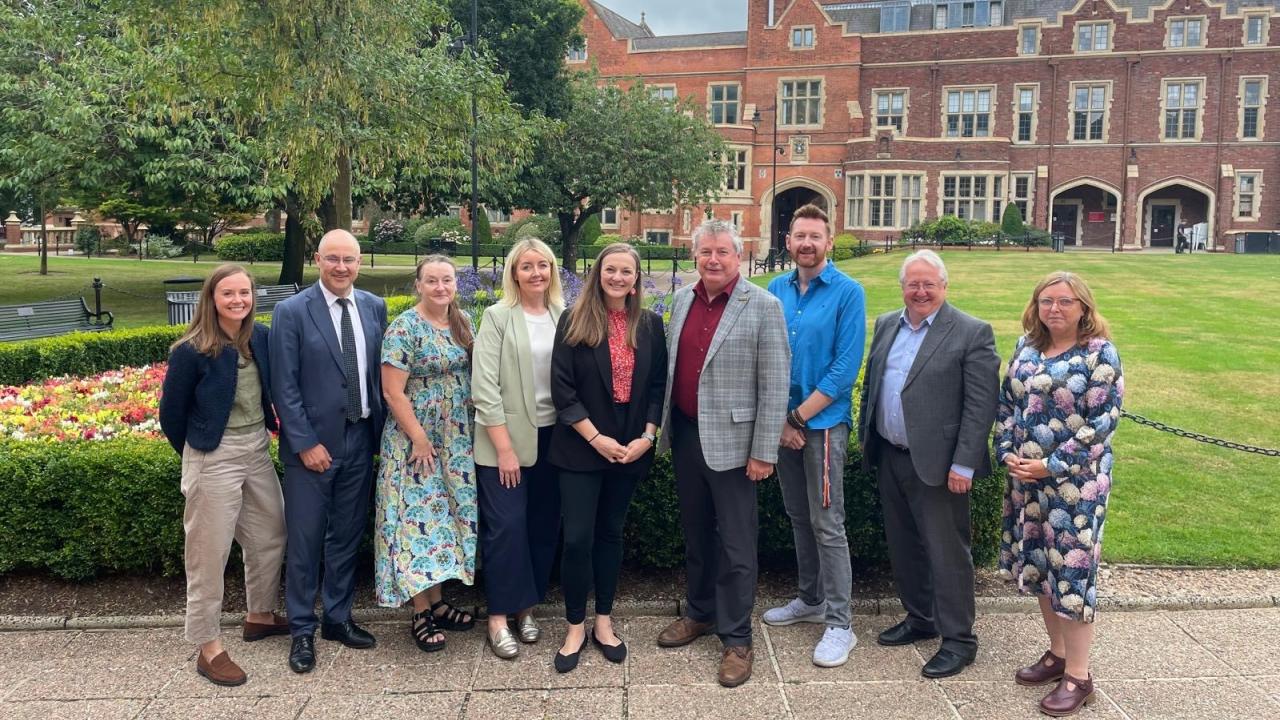
The program is managed by Isabelle Girard, director of the Research Core Facilities Program in the Office of Research, who works in collaboration with the Research Core Advisory Council, campus leadership and additional stakeholders to select awards with the highest potential impact of support across the campus.
Selection Criterion
Recipients were selected based on multiple criteria related to research impact, the ability to provide critical or high-demand capabilities or that offer unique value based on current or emerging needs. The role of the core in education and training, alignment with research priorities and financial stewardship were also considered. Applications only were accepted from existing cores and were reviewed by the Research Core Advisory Council with input from school and college deans.
Recipients of the Research Cores Central Investment Program
Advanced Materials Characterization and Testing Laboratory
The Advanced Materials Characterization and Testing Laboratory is a multidisciplinary facility that supports a wide variety of materials characterization tools for hard and soft materials.
The funding will provide critical infrastructure and essential supplies for characterization of material properties at the atomic and nanoscale. The support will also enable the development of novel analytical methods for frontier research while ensuring equitable access for smaller labs, early-career faculty and students. The funding request was made by Houpu Li on behalf of the core.
Biological Electron Microscopy Core
The Biological Electron Microscopy Core enables research programs spanning structural biology, biochemistry, biophysics, cell biology, and medicine and is indispensable to drug discovery and understanding disease mechanisms. The funding will allow the facility to continue operation of the cryo-EM, a unique and irreplaceable instrument that provides macromolecular structure determination of biological materials at atomic resolution. The funding request was made by Jennifer Cash on behalf of the core.
CA&ES Research Greenhouse Unit
The CA&ES Research Greenhouse Unit provides a high level of environmental control for a wide range of plant-based research and disciplines. The funding will allow the facility to replace and upgrade 25-year-old control panels to maintain precisely controlled greenhouses for research and teaching. The funding request was made by Eric Haddix on behalf of the core.
Campus Mass Spectrometry Facility
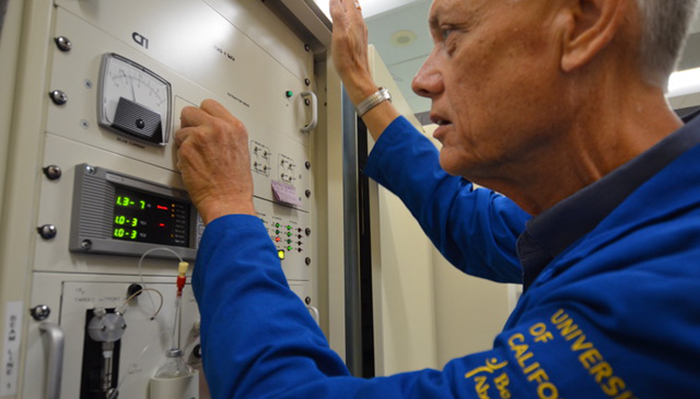
The Campus Mass Spectrometry Facility enables researchers to access high-end instrumentation without the financial and technical burden of instrument ownership and maintenance, allowing laboratories to focus on their scientific objectives. The funds will allow repair of a linear detector that is essential for molecular mass determination of oligonucleotides and intact proteins. The funding request was made by Aaron Stacy on behalf of the core.
Center for Geotechnical Modeling
The Center for Geotechnical Modeling is a world-class centrifuge modeling facility for research on the performance of soil-structure systems affected by earthquake, wave, wind and storm surge loadings, advancing civil infrastructure and natural systems, including natural hazard mitigation, climate resilience, and resource management. Funds will be used to bridge a gap in federal support and allow development of a qualified and competitive proposal for the next decade of NSF operations. The funding request was made by Jason DeJong on behalf of the core.
Molecular and Genomic Imaging
The Center for Molecular and Genomic Imaging is a unique facility that couples a dedicated cyclotron and radiochemistry facility with comprehensive imaging capabilities into one deliberately coordinated enterprise. Funds will be used for cyclotron and microCT repair labor and parts which are essential to avoid prolonged shutdown of radiotracer production and disruption of preclinical imaging. The funding request was made by Abhijit Chaudhari on behalf of the core.
Center for Nano Micro Manufacturing
The Center for Nano Micro Manufacturing facility provides the campus community with a full spectrum of state-of-the-art micro-nanofabrication equipment, processes and services. The funds will cover the service contracts for the ThermoFisher Scios FIBSEM, a critical instrument that is required for advanced materials characterization. The funding request was made by Ryan Anderson on behalf of the core.
Inhalation Exposure Core
The Inhalation Exposure Core provides specialized scientific resources for the assessment of health impacts resulting from inhaled environmental constituents and evaluation of therapeutics for the mitigation of cardiorespiratory disease. The funds received will ensure salary support and equipment to update the pulmonary function testing equipment that is essential to understanding how airways react to inhaled common air pollutants, combustion products, allergens, biologics, and therapeutic agents. The funding request was made by Christopher Royer on behalf of the core.
Contained Research Facility
The Contained Research Facility provides a secure BSL-P3 environment for research on invasive plant pests, in alignment with the CA&ES research priority to develop sustainable agricultural and food systems. The award will provide support for emergency repairs and maintenance to restore function to the growth chambers used to isolate plants and pests. The funding request was made by Kristine Godfrey on behalf of the core.
Controlled Environment Facility
The Controlled Environment Facility is a state-of-the-art research facility housing over 165 chambers with precise control of temperature, humidity, light, and air quality. It supports a large range of research projects, including those related to agriculture, environmental science, and sustainability. The funds will help replace obsolete fluorescent bulbs and install LED lighting in four large growth chambers shared by 14 laboratories. The funding was requested by Bo Liu on behalf of the core.
Flow Cytometry Shared Resource
The Flow Cytometry Shared Resource is the primary flow cytometry core laboratory at UCD providing state-of-the-art and workhorse instruments for the identification, counting and sorting of cells and particles used in studies of cancer, immunology, molecular biology and infectious disease. The award will ensure continued operation of the Fortessa, the most highly utilized cytometer in the FCSR. The funding was requested by Bridget Mclaughlin on behalf of the core.
Genomics Shared Resource
The Genomics Shared Resource enables interdisciplinary discovery and innovation across UC Davis and UC Davis Health through genomics applications such as bulk RNA-seq and whole genome/exome sequencing, specialized sample processing, access to instrumentation and comprehensive bioinformatics support. As part of the Comprehensive Cancer Center, the core advances research in cancer biology, precision medicine and translational research. The funding will allow the core to upgrade to a digital PCR system and replace a failing bioanalyzer. The funding request was made by Stephanie Liu on behalf of the core.
Health Sciences District Advanced Imaging Facility
The Health Sciences District Advanced Imaging Facility in the School of Veterinary Medicine provides advanced microscopy and image analysis capabilities as well as consultation, training, and support throughout research experiments. The funding will ensure continued operation of advanced instruments that allow users to conduct confocal, super-resolution, live-cell, lifetime, two-photon, large sample light sheet, and intravital microscopy. The funding request was made by Ingrid Brust-Mascher on behalf of the core.
MCB Light Microscopy Core
The MCB Light Microscopy Core within the College of Biological Sciences provides the research community with access to state-of-the-art imaging instruments and tools designed to collect low-light fluorescent images with high temporal and spatial resolution of both living and fixed organisms and to allow for high-throughput image collection. The funding provides support for the technical director to sustain advanced microscopy capabilities. The funding request was made by Ken Kaplan on behalf of the core.
Imaging Research Center
The Davis Skyra is the Imaging Research Center’s dedicated research system for both large-animal and human MRI, underpinning flagship programs at the Center for Mind and Brain, Center for Neuroscience and California National Primate Research Center. The funding will secure the continuity of Davis Skyra operations and protect unique capabilities that are central to the UC Davis research mission. The funding request was made by Abhijit Chaudhari on behalf of the core.
Nuclear Magnetic Resonance Facility
The Nuclear Magnetic Resonance Facility provides qualified researchers in the biological, medical and physical sciences access to state-of-the-art NMR instrumentation for spectroscopy and imaging. The funding will support the maintenance plan for cryoplatform devices and liquid helium recovery systems which are essential for cooling the NMR detection electronics to achieve ultra-high NMR detection sensitivity. The facility houses 8 NMR spectrometers (300 MHz to 800 MHz) equipped with superconducting magnetsand serves over 200 users. The funding request was made by James Ames on behalf of the core.
Plant Transformation Facility
The Plant Transformation Facility provides services in plant transformation, genome editing and plant cell biology and is equipped with environmentally controlled chambers designed especially for growth of plant tissue cultures. The funds will cover critical updates for those growth chambers, including replacing the whole illumination system from fluorescent tubes to LED, and updating the computers that control the growing settings in the chambers. The funding request was made by Juan Debernardi on behalf of the core.
Tupper Hall Tissue/Cellular EM Facility
The Tupper Hall Tissue/Cellular EM Facility champions campus and federal research priorities by delivering accessible, high-resolution electron microscopy services to the UC Davis community and external partners. The funding will ensure continued operation of the electron microscope and ultramicrotome and assist in optimizing staffing and accountability. The funding request was made by Wendy Campana on behalf of the core.
UC Davis Analytical Laboratory
The UC Davis Analytical Laboratory conducts soil, plant, feed, and water analyses to help producers optimize fertilizer use, improve livestock nutrition, and manage environmental impacts. The award will ensure regulatory compliance and quality assurance and provide maintenance agreements for critical workhorse instruments. AnLab is one of the testing labs that Commercial Feed Regulatory Program utilizes to verify quality-assurance inspections of feed-manufacturing facilities. The funding request was made by Ranjani Youngman on behalf of the core.
Veterinary Orthopedic Research Laboratory
The Veterinary Orthopedic Research Laboratory faculty, students and staff perform advanced research in the field of orthopedics for humans and companion animals, and the core provides mechanical testing capabilities ranging from very large objects (a whole equine limb, for example) to miniature and specialized (cartilage of a mouse knee joint). Funds will be used to upgrade the mechanical testing system for the evaluation of strength properties of bone, tendon, ligament, and other materials. The funding request was made by Tanya Garcia-Nolen on behalf of the core.
About the Research Core Facility Program
The UC Davis Research Core Facilities Program facilitates access to state-of-the-art technology, advanced expertise and other shared resources for researchers at UC Davis, in the UC system, at academic institutions, and in the commercial community. Resources include an online Research Core Directory of available research facilities and services; a software platform (Stratocore PPMS) to manage orders, scheduling, and billing; and a collaborative community to support core leaders and staff.
Contacts
Isabelle Girard, Director of the Research Core Facilities Program
Diana Lazo, Research Data Analyst